 RELIABLE TOWING
Professional Care
RELIABLE TOWING
Professional Care
RELIABLE TOWING
Professional Care
RELIABLE TOWING
Professional Care
The complete guide — correct cable connection order, safety rules, and what to do when it won't start.
Written for beginners. Takes 5 minutes to learn, 10 minutes to do.
Before You Begin
10-12 ft, 4-6 gauge. Thick, well-insulated cables with strong clamps.
A car with a charged 12V battery — parked close but not touching.
Safety glasses and gloves. Wire brush for corroded terminals.
Portable lithium-ion starter — no second car needed.
No cables or jump pack?
Call (703) 901-4821 — we'll jump-start your car in 15-30 minutes with professional equipment.
Step-by-Step
Connection order is everything. Follow these steps exactly — reversing the order can damage both vehicles.
Park the working car 2-3 feet from the dead car, facing each other. Cars must not touch. Both ignitions OFF. Parking brakes ON.
Pop both hoods. Find the positive (+) terminal (red/marked "+") and negative (−) terminal (black/marked "−") on each battery. Clean any white/green corrosion with a wire brush.
Attach one red clamp to the positive (+) terminal of the DEAD battery. Make sure it grips firmly.
🔑 Remember: "Red to Dead" — always start with red on the dead battery.
Attach the other red clamp to the positive (+) terminal of the GOOD battery on the working car.
Both red clamps are now on positive terminals. No electricity flowing yet — the circuit isn't complete.
Attach one black clamp to the negative (−) terminal of the GOOD battery on the working car.
NOT the dead battery! Attach the final black clamp to bare, unpainted metal on the dead car's engine block or frame — a bolt, bracket, or lift hook.
💡 Why? The final connection creates a spark. Making it away from the battery prevents igniting hydrogen gas.
Start the good car first and let it idle 2-3 minutes. Then try the dead car. If it doesn't start:
After The Jump
Disconnect in reverse order. Wrong order = voltage spikes that can fry your car's computer.
⚠️ Never let clamps touch each other or any metal during disconnection.
Keep the engine running. The alternator needs driving RPM to recharge. Don't turn it off too soon or you'll be stranded again.
Most auto parts stores test batteries free. Batteries last 3-5 years — don't wait for the next dead morning.
Quick Reference
Good Battery
(Working Car)
Dead Battery
(Your Car)
Advertisement
Troubleshooting
The most common issue. Wiggle each clamp to bite into clean metal. Corrosion or paint can block the connection. Try a different ground point.
Dead for a long time or 4+ years old? It may not accept a charge. Rapid clicking sound = starter solenoid, not the engine. Battery needs replacement.
Lights and radio work but engine won't crank? You may have a bad starter, alternator, or ignition switch. A jump-start won't fix these — you need a tow.
Below 0°F, batteries lose 60% of cranking power. Let the good car charge the dead battery for 10-15 minutes at elevated RPM before attempting to start.
Advertisement
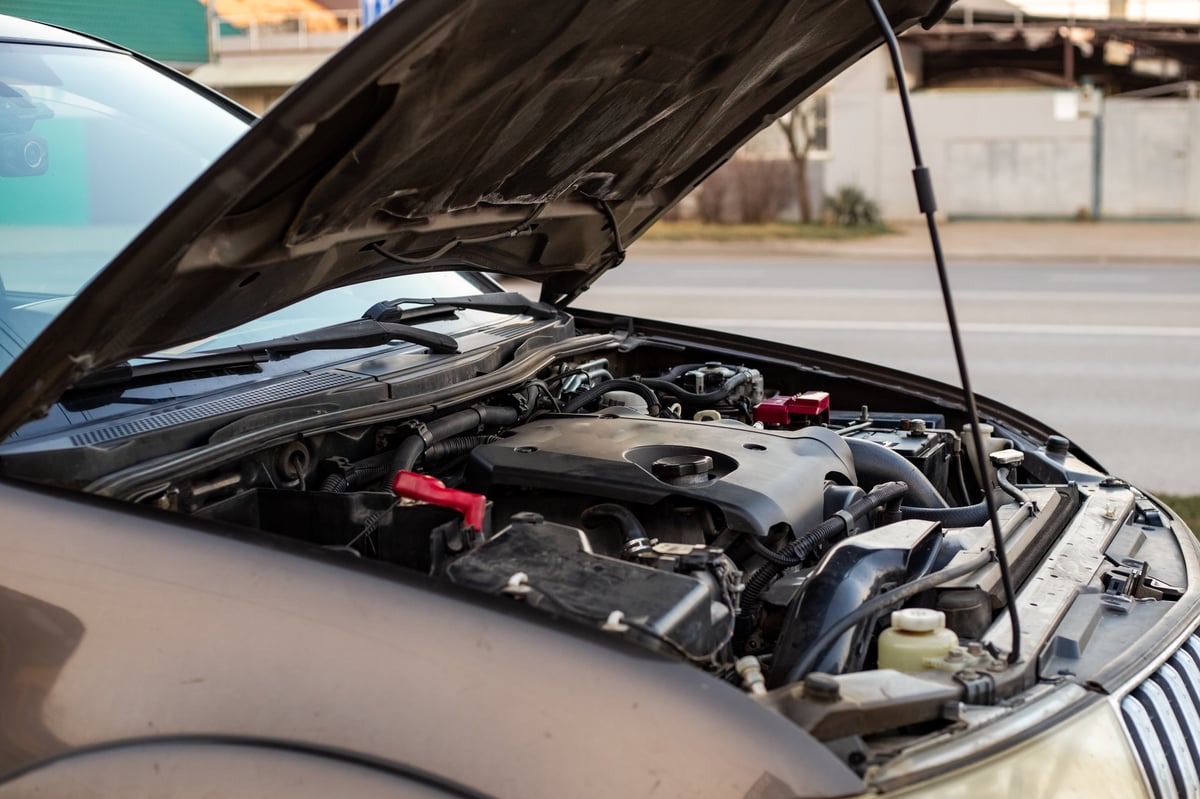
If you're unsure about jump-starting, don't have cables, or the battery won't take a charge — call us. We'll handle it safely in 15-30 minutes.
FAQ